How to Negotiate SaaS Renewals (And Actually Get a Better Deal)
Most SaaS vendors expect negotiation at renewal time — but most buyers don't ask. Here's a practical guide to negotiating better pricing, terms, and flexibility on your SaaS contracts.
Termedora Team
SaaS Management Experts
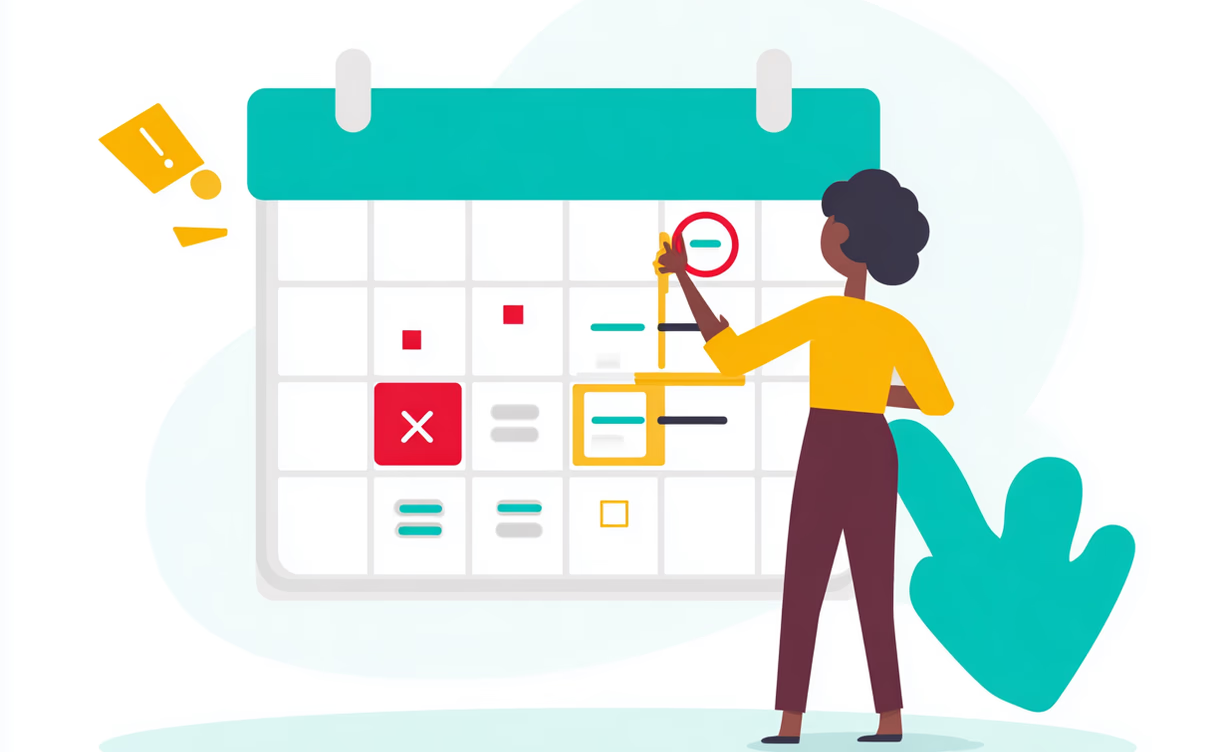
Most SaaS buyers renew without asking a single question.
The invoice arrives, someone approves it, and the contract rolls over at the same price — or higher. No pushback. No conversation. Just another year at whatever the vendor decided to charge.
This is a mistake. Renewal time is one of the few moments in a vendor relationship where you hold genuine leverage — and most teams don't use it.
This guide covers how to prepare for a SaaS renewal negotiation, what to ask for, and how to handle the conversations that follow.
Why Renewal Time Is Your Best Leverage Point
Acquiring a new customer costs a SaaS vendor significantly more than retaining an existing one. Most vendors know this, and their sales teams are incentivised to keep you.
That creates a specific window of leverage — roughly 60 to 90 days before your renewal date — where you're in a stronger position than at any other point in the contract cycle.
After that window closes, your options narrow. Once you're within 30 days of renewal, vendors know you're unlikely to run a full procurement process and switch tools in time. The pressure is on you, not them.
Start conversations early, or don't start them at all.
Before the Conversation: Do Your Homework
Walking into a negotiation without preparation is how you end up accepting the first number offered.
Pull your usage data. Most SaaS tools expose this in their admin dashboard. Know your active users, feature adoption, and whether usage has grown or declined since your last renewal. Low usage is leverage — but only if you can cite it specifically. Know your total cost. Include not just the subscription fee but any add-ons, overages, or professional services charges from the past year. Vendors sometimes hide cost creep across line items. Research alternatives. You don't need to actually switch — but you need to know what switching would cost. Look up one or two credible alternatives and understand their pricing. Mentioning a competitor by name signals that you've done the work. Know your cancellation deadline. This is the date that matters, not the renewal date. If your contract requires 30 days' notice and you want flexibility, you need to start the conversation at least 60–90 days out.What to Ask For
Most buyers focus on price. That's often not the best place to start.
Pricing reduction. A 10–20% reduction is commonly achievable, especially for multi-year customers or teams with declining usage. Ask for a specific number, not a vague discount. "We'd like to renew at $X" is stronger than "can you do better?" Price lock. Ask the vendor to freeze pricing for the next 1–2 years. Many vendors build in automatic annual increases of 3–8%. A price lock protects you without requiring a lower headline number. User count adjustment. If your team has shrunk or usage data shows a subset of your licensed seats are actually active, ask to right-size. Paying for 50 seats when 30 people use the product is straightforward to address at renewal — much harder to address mid-contract. Improved payment terms. Annual upfront typically earns a discount over monthly billing. If you're currently on monthly, committing to annual can reduce costs 10–20% without any negotiation at all. Contract length flexibility. A two-year commitment often unlocks better pricing. Only do this if you're confident in the tool — but if you are, use it. Added services. If price reduction is off the table, ask for something else: additional seats, extended support, onboarding assistance, or access to features you're not currently on. Vendors can often say yes to these when they can't move on the headline number.How to Have the Conversation
Keep the first outreach short. You're not asking for a final decision — you're opening a conversation.
A simple approach:
"Our contract renews on [Date]. Before we confirm renewal, we'd like to discuss options. We've been customers for [X years] and want to make sure the terms still make sense. Can we set up a brief call?"
That's it. You don't need to threaten to leave, reveal your alternatives, or explain your budget situation. Just signal that you're paying attention and you want a conversation.
On the call:- Lead with your usage and tenure as context, not as a complaint
- State what you're looking for specifically — a number, not a vague ask
- Don't accept the first response as final; most account managers have room to move
- Don't bluff about switching if you're not genuinely willing to
- Don't negotiate with someone who doesn't have authority to approve discounts — ask to involve their manager or account exec if needed
- Don't wait until the last two weeks before renewal; the window for meaningful movement closes fast
Quarter-End and Year-End Timing
SaaS vendors operate on sales quotas. Account managers and their managers are under pressure to close renewals before quarter-end and year-end.
If your renewal falls near those dates — or if you have flexibility on timing — use it. A vendor who needs to hit a target by 31 March is more motivated to move on pricing than one who has three months of buffer.
This doesn't mean manufacturing urgency. It means being aware of the calendar and timing your conversations accordingly.
Multi-Year Deals: When They're Worth It
A two or three-year commitment locks in pricing and removes annual negotiation friction — but it also removes your flexibility.
Consider a multi-year deal if:
- You're highly dependent on the tool and switching costs are high
- The vendor is offering a meaningful discount (15%+ is worth considering)
- Your team and use case are stable — not growing or contracting rapidly
Avoid multi-year deals for tools that are still proving themselves, or where your usage is uncertain. Being locked in at year two of a tool nobody uses is an expensive mistake.
When the Vendor Won't Budge
Some vendors have rigid pricing structures, especially at the lower end of the market where deals are automated and account managers don't have discretion.
If you've asked and the answer is genuinely no:
- Confirm what you'd need to change to access better pricing — volume, commitment length, payment terms
- Ask about the roadmap — if a price increase is coming in the next cycle, lock in current pricing now even if you can't get a reduction
- Document the conversation — if you do decide to switch later, having a record of the negotiation helps you make the case internally
A vendor who won't negotiate once is worth noting. A vendor who won't negotiate twice is a signal to start evaluating alternatives seriously.
The Negotiation Checklist
Before your next renewal conversation:
- [ ] Pull usage data — active users, adoption rate, seat utilisation
- [ ] Calculate total cost including add-ons and overages
- [ ] Research one or two credible alternatives and their pricing
- [ ] Confirm your cancellation deadline (not just the renewal date)
- [ ] Decide what you want: price reduction, price lock, user count adjustment, payment terms, or added services
- [ ] Send outreach at 60–90 days before renewal, not 14 days
- [ ] Get any agreed terms confirmed in writing before the renewal date
The Bigger Picture
Individual negotiation wins matter. But the bigger opportunity is systematic — having a process that surfaces every renewal at the right time, assigns an owner, and ensures the conversation happens before the window closes.
Teams that review contracts consistently save more than those that negotiate hard on individual deals. The compounding effect of reviewing 20 contracts a year, catching unused tools, and renegotiating where usage has declined adds up faster than any single win.
*Termedora tracks your SaaS contracts and sends renewal reminders at 90, 60, and 30 days — so you always have enough lead time to prepare, negotiate, and decide.
Start a free trial and go into every renewal with the upper hand.*Related Articles
How to Avoid Surprise SaaS Auto-Renewals (And Save Thousands Each Year)
Learn how SaaS auto-renewals quietly cost companies thousands each year — and the exact system you can use to prevent surprise charges, regain control, and reduce wasted spend.
Contract Renewal Reminder Email Templates (Copy-Paste Ready)
Ten ready-to-use email templates for contract renewal reminders — internal team alerts, vendor outreach, negotiation requests, and cancellation notices.